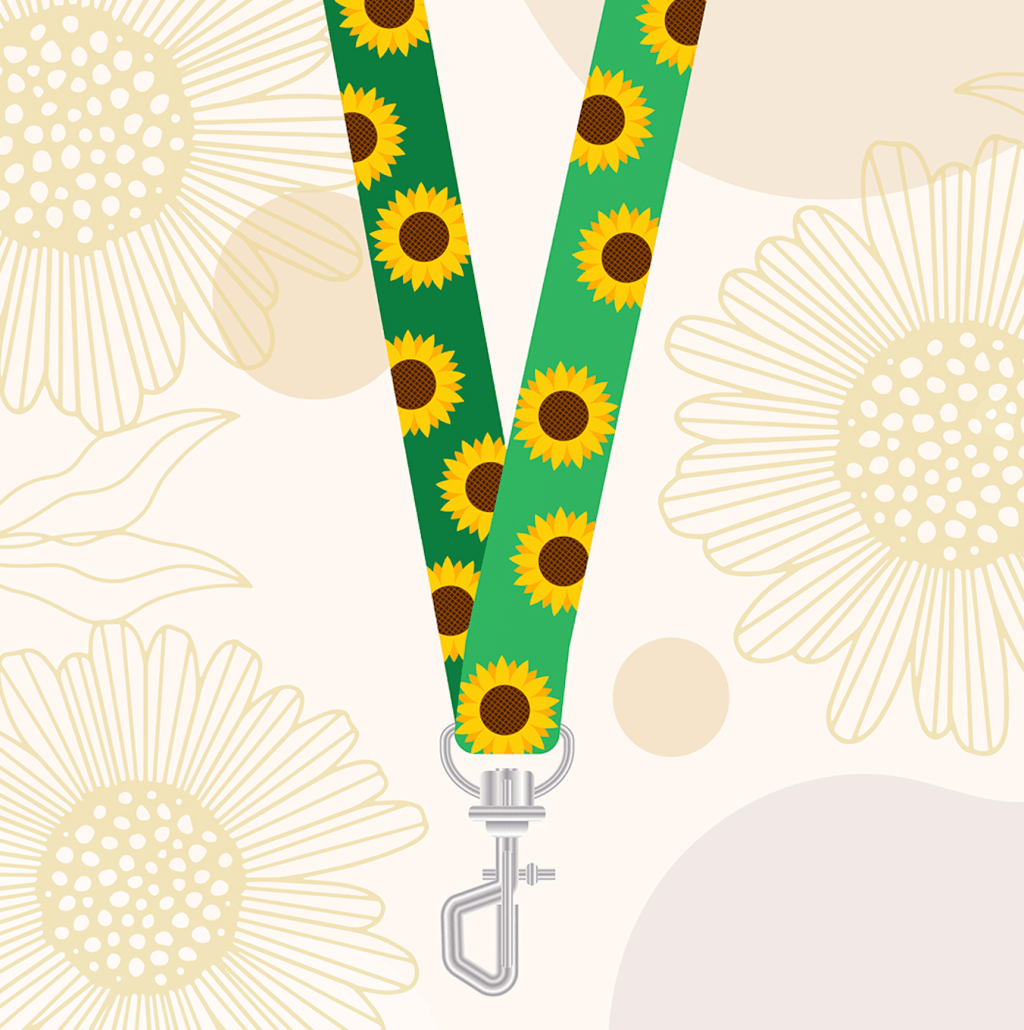
This week I am going to talk about the sunflower lanyard, and where, when, and how I use it.
If you are unaware, the sunflower lanyard was designed to help people with hidden disabilities share that they might need a little more support, understanding and patience. It started out in airports – given the stresses that come with flying, it is apparent why – and is now widely recognised in most places, such as public transport, restaurants and shops. There are lots of disabilities that are ‘invisible’ meaning they cannot always be noticeable to members of the public or workers. These invisible disabilities could include, but are not limited to: Alzheimer’s, Diabetes, Epilepsy, or MS. Autism is also a hidden disability, which is why I wear my lanyard.
I first became aware of the sunflower lanyard during the pandemic. It was used for people who – for reasons related to their disability – could not wear a mask or were immunocompromised. I wore the lanyard because I would often panic and struggle to breathe whilst wearing mask.
I then realised the other benefits of having my sunflower lanyard on. I could tell that people were a little more aware of the situation I was in and how it could be causing me anxiety. When I wore my sunflower lanyard, I felt like I was given more time and understanding, and it helped me feel more confident when I was out and about.
There have been some specific circumstances when wearing my sunflower lanyard has been a life saver. One situation where it is very helpful is in a medical setting, like at the GP, dentist or opticians. I have fund that people will explain what they’re doing to me and why they’re doing it, which makes me feel calmer – and they also give me extra time to process any decisions I need to make. It also explains, without us having to say anything, why my mum will be at appointments with me.
The sunflower lanyard is also very useful with transport. Last summer I went to Australia, which involved very long flights. I was quite anxious and could get overwhelmed and cry quite a lot in the airports and on the planes. Having my sunflower lanyard allowed us to fast-track through the loud, busy security area; to be allowed on the plane first so I had plenty of time to get settles; and for the flight staff to just double check on me if I needed anything. Honestly, the support I got at the airports was revolutionary, and I’m not sure how I would’ve managed without it.
Finally – as I am getting older and more independent – my sunflower lanyard helps me to feel more confident and comfortable when I am by myself. On a recent overnight stay away from home – my first solo trip – my lanyard empowered me to make the most of my time. It was helpful in the hotel during check-in, and at breakfast time (where I was given a quieter table, and it was explained to me in more detail how to get my food), and I felt fairly confident that I could ask for support, with the help of my lanyard, if needed.
Whilst on my weekend away, it was important for me to feel supported when tackling something that was new to me. On the trains, my lanyard abled me to ask what platform to go to and to get past the ticket barriers before they got busy. I also noticed that the conductor would sometimes double check that I was ok and if I needed anything or had any questions. This greatly reduced the anxiety I may have felt when travelling by myself for the first time.
It was also helpful in shops and restaurants. Because of my autism, I can get quite worked up and flustered when making an order or going to the till to pay. I felt like my lanyard was a good comfort to have as it helped me to relax and slow down.
There can be a couple of issues with the sunflower lanyards, such as: people not being trained to recognise and respond to them, or the fact that buying them is unregulated and could be taken advantage of. These challenges are nothing, however, compared to the benefits of the hidden disabilities scheme. The compassion and understanding that you get from wearing the sunflower lanyard is so reassuring and valuable. It is such a great tool to be equipped with as an autistic person.


 I am autistic